WHAT BISON SEE film
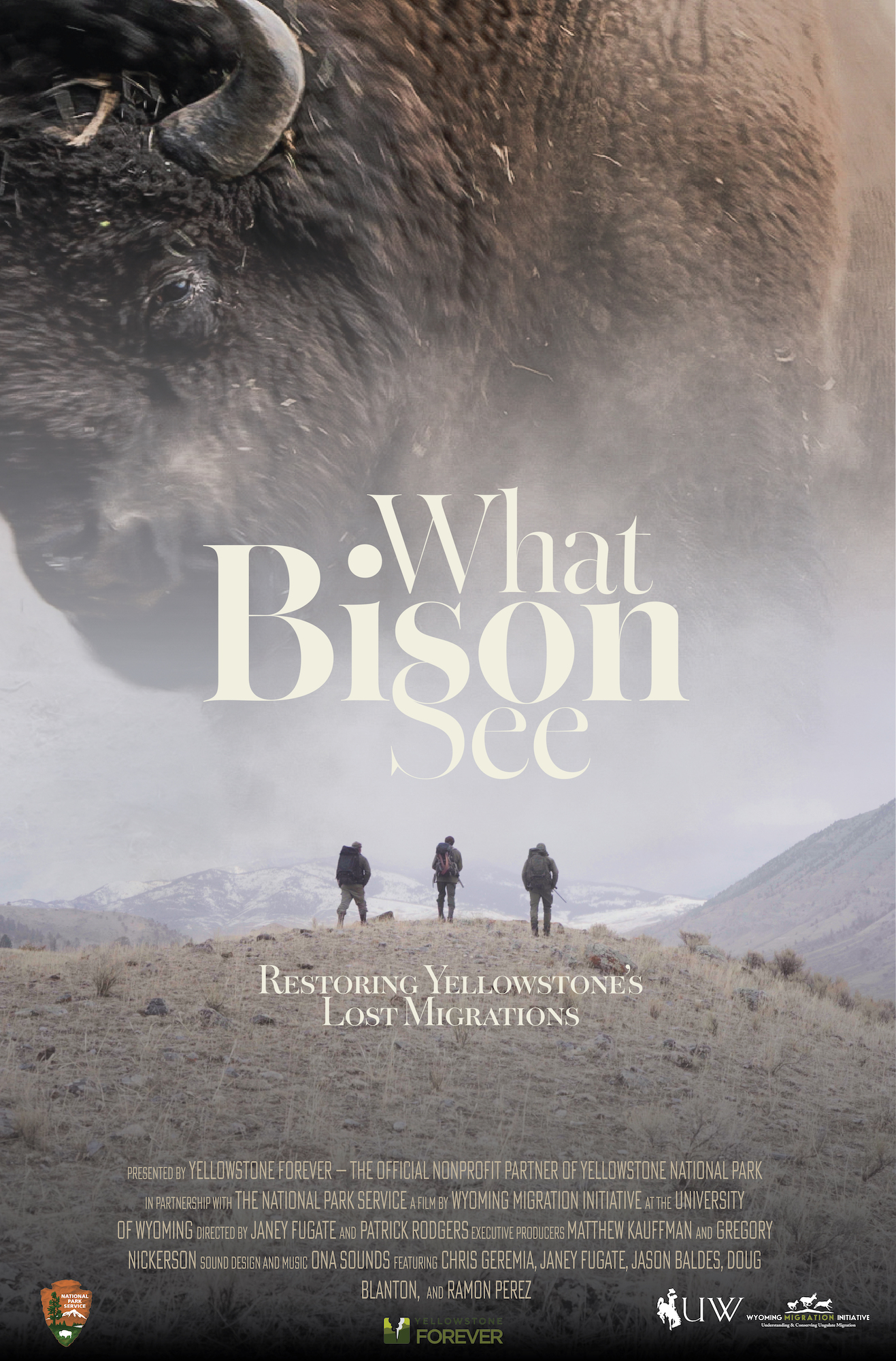
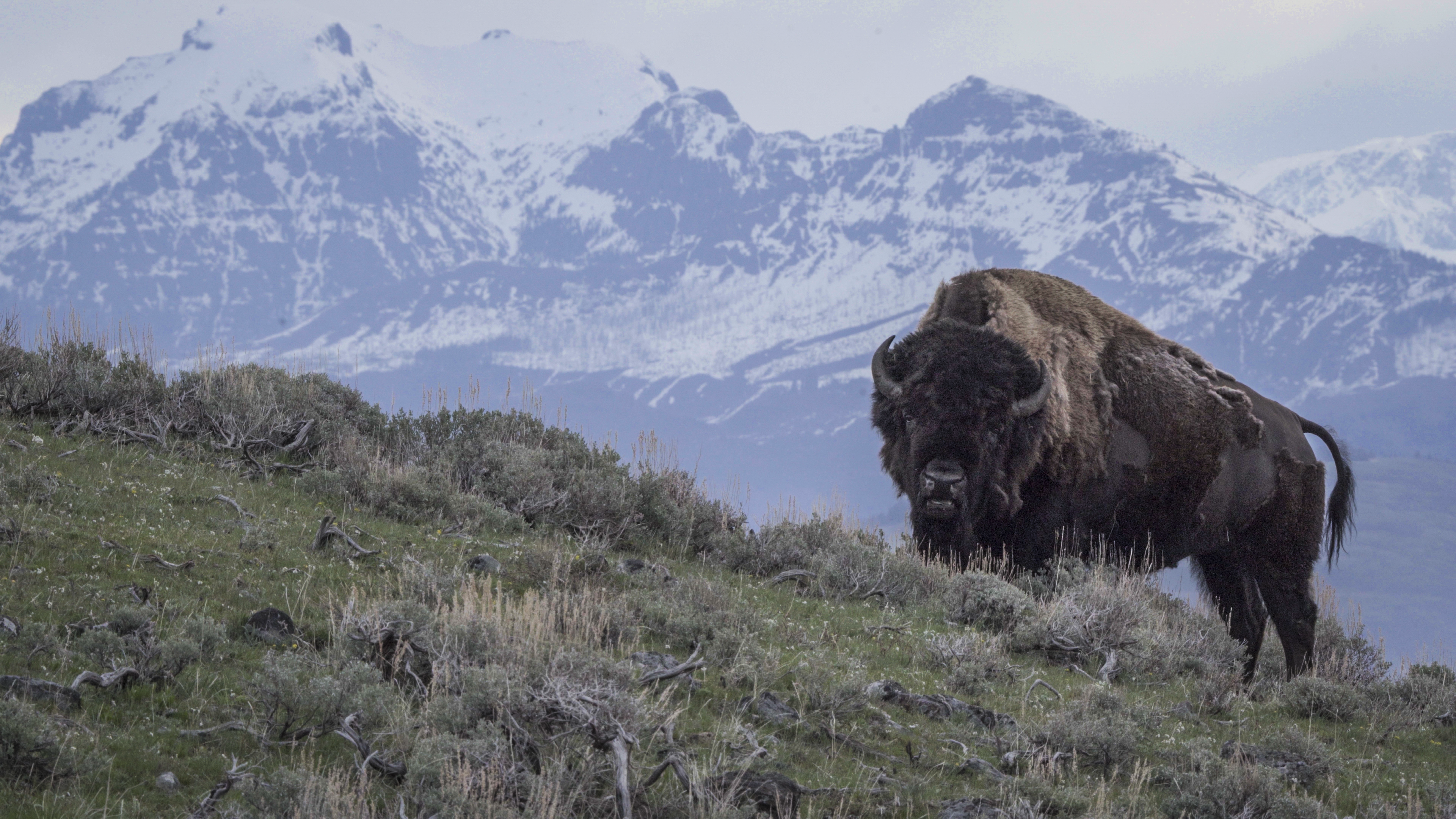
A new wildlife documentary gives an unprecedented view into how Yellowstone bison recovered from near-extinction and relearned to migrate.
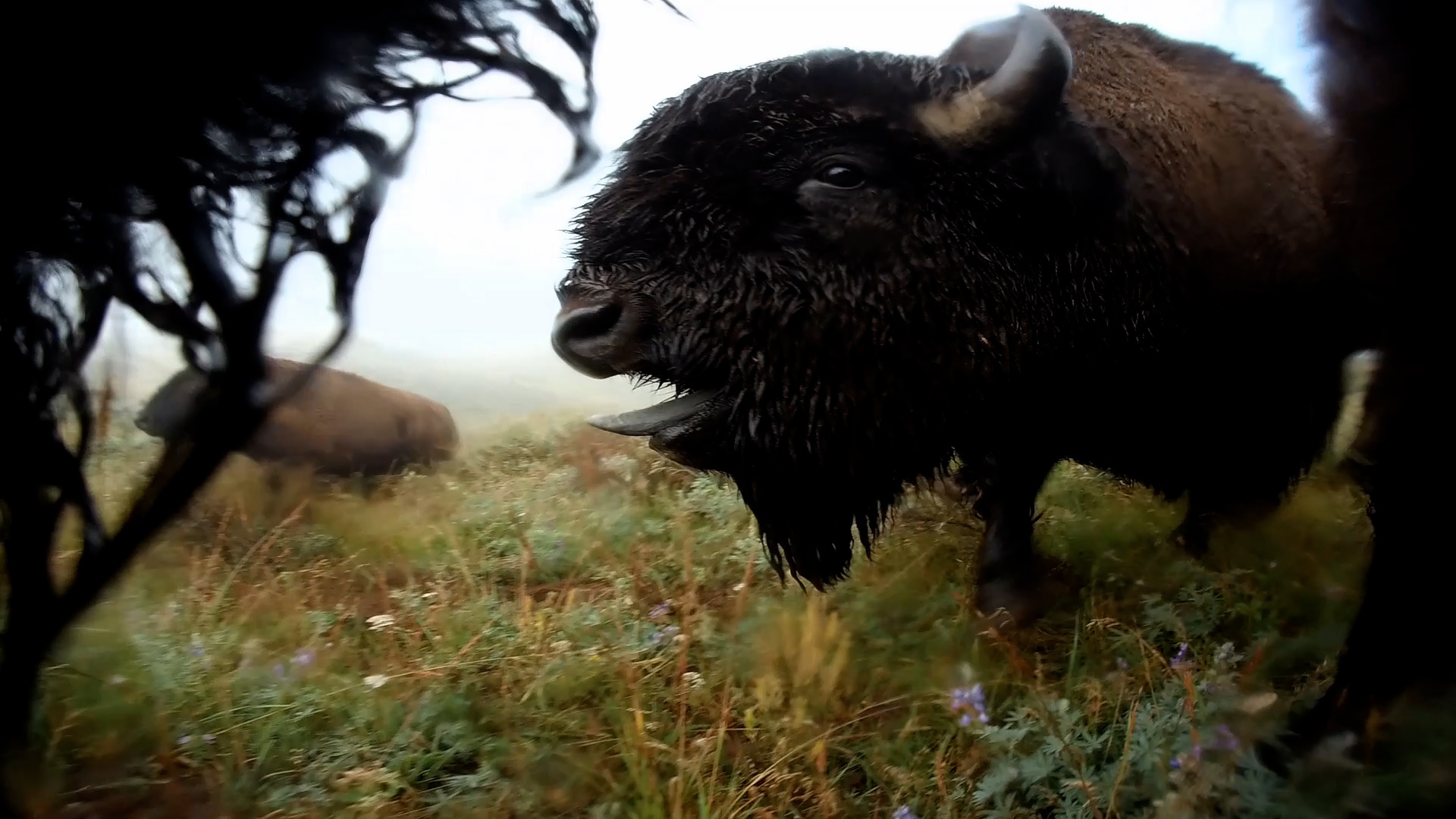
“What Bison See: Restoring Yellowstone’s Lost Migrations” features exclusive footage from the first high-definition camera collars deployed on bison in the national park.
The film is presented by Yellowstone Forever and produced by the Wyoming Migration Initiative at the University of Wyoming in partnership with the National Park Service.
The film made its world premiere at the Old Faithful Visitor Education Center Tuesday, Aug. 25, the 110th birthday of the National Park Service. A second debut was held Sept. 11, at the Buffalo Bill Center of the West in Cody.
The documentary has a run time of 21 minutes and will screen at the Old Faithful and Canyon visitor education centers for the next three years or more. A preview of the film is available at https://vimeo.com/migrationinitiative/bisonteaser.
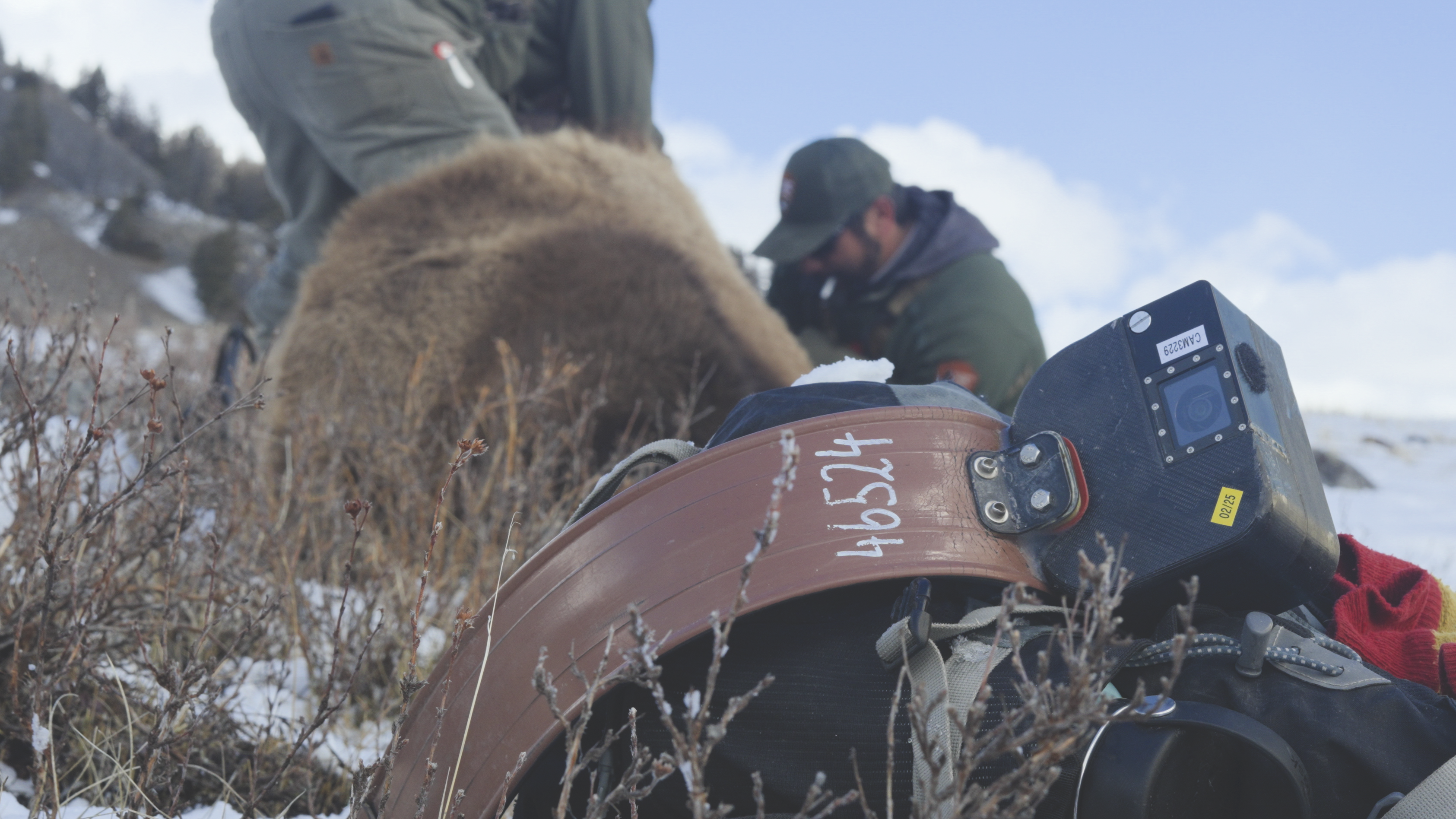
Filmmakers at UW partnered with Yellowstone National Park to gain exclusive access for filming bison from unique perspectives, including with high-definition cameras built into wildlife GPS collars.
The opening scene of the film shows Yellowstone biologists, led by team leader Chris Geremia, safely using tranquilizing darts to sedate four bison and outfit each with camera collars.
“The camera collars provided us with a view into the lives of wild Yellowstone bison like no one has ever seen before,” says Patrick Rodgers, a research scientist at the Wyoming Migration Initiative and co-director of the film. “We’re excited to share the sights, sounds and science of wild migrating bison.”
“What Bison See” reveals where and how the animals established the migration routes they use today after a century and a half of restoration efforts.
At one point in the late 1800s, the only Yellowstone bison remaining were 23 animals in the isolated headwaters of Pelican Creek. Park managers brought in other bison from captive operations to support the population, raising them at the Lamar Buffalo Ranch in Lamar Valley for decades, until the park began to allow more wide-ranging movements.
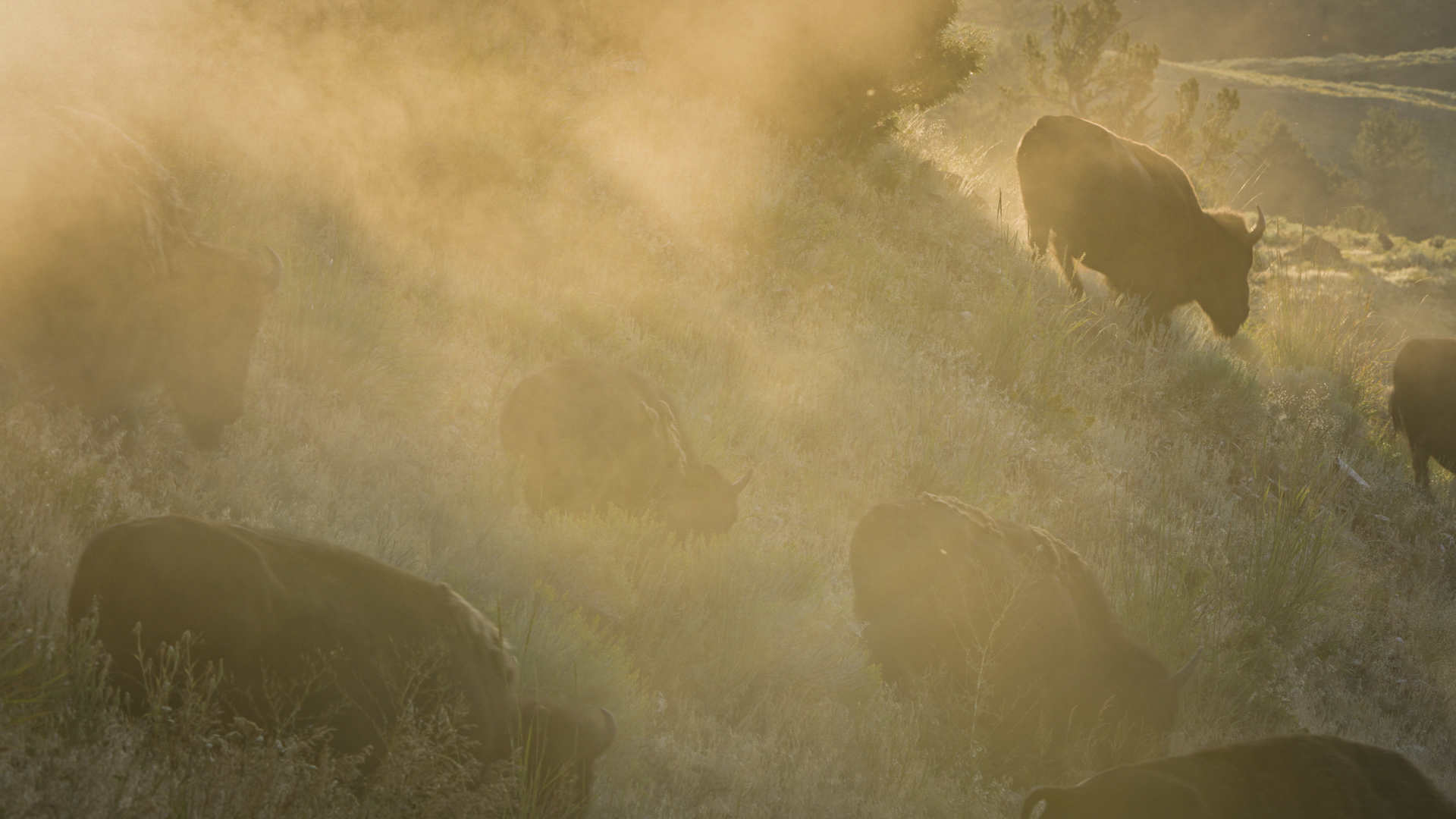
The first recorded migration of Yellowstone’s growing bison population was documented in the winter of 1942, when about 130 bison left the Lamar Valley and made their way to just outside the town of Gardiner, Mont.
Mary Meagher, the first female biologist for the Park Service, was one of the first people to record bison migrations and movements in the park, studying the animals from foot, horseback and airplane. Her research forms the foundation of the historical record of bison relearning to migrate.
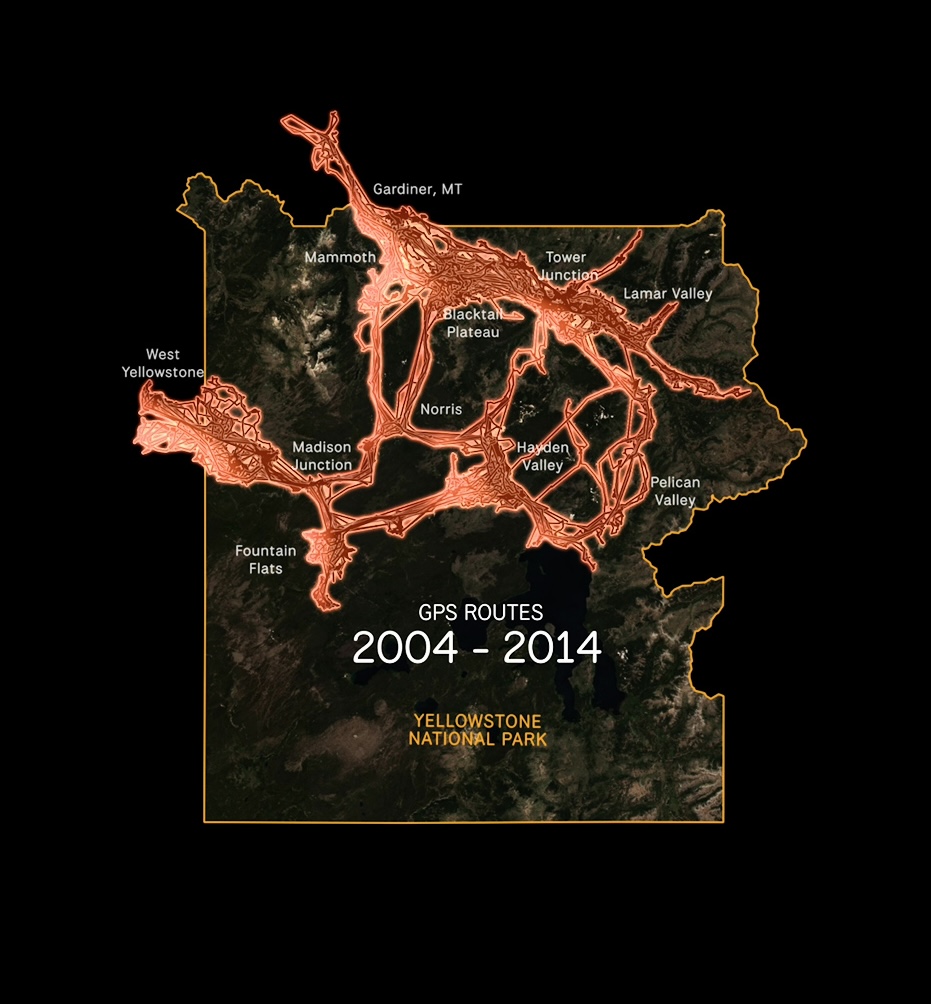
More recently, with the advent of GPS technology, biologists have tracked and mapped bison movements in real time and with precise geospatial accuracy.
The historical documents, plus GPS data, combine to form a mammoth-sized dataset, allowing researchers from Yellowstone and UW to piece together how bison relearned migration routes lost after settlers hunted buffalo to near-extinction in the region.
“Long-distance migration was gone when Yellowstone nearly lost its buffalo,” Geremia says in the film. “And I wanted to know, how did this evolution of relearning migration occur over time?”
Geremia reached out to Matt Kauffman, leader of the Wyoming Cooperative Fish and Wildlife Research Unit and the Wyoming Migration Initiative at UW.
Kauffman enlisted the help of researcher Janey Fugate to use historical records and modern GPS data to piece together the puzzle of how bison built up their migration routes through time, work that formed part of her master’s thesis.
Fugate conceived of the idea for a film educating the public on this incredible discovery. She and Rodgers directed the film for the Wyoming Migration Initiative.
Free Ranging, Once Again
Seasonal migration is a core part of bison ecology in Yellowstone’s mountains and valleys.
Though bison can navigate snow better than most herbivores, throwing around more than half a ton of body weight to access food and make trails through drifts, there is a point at which snow becomes too deep, and bison must relocate to more hospitable habitat.
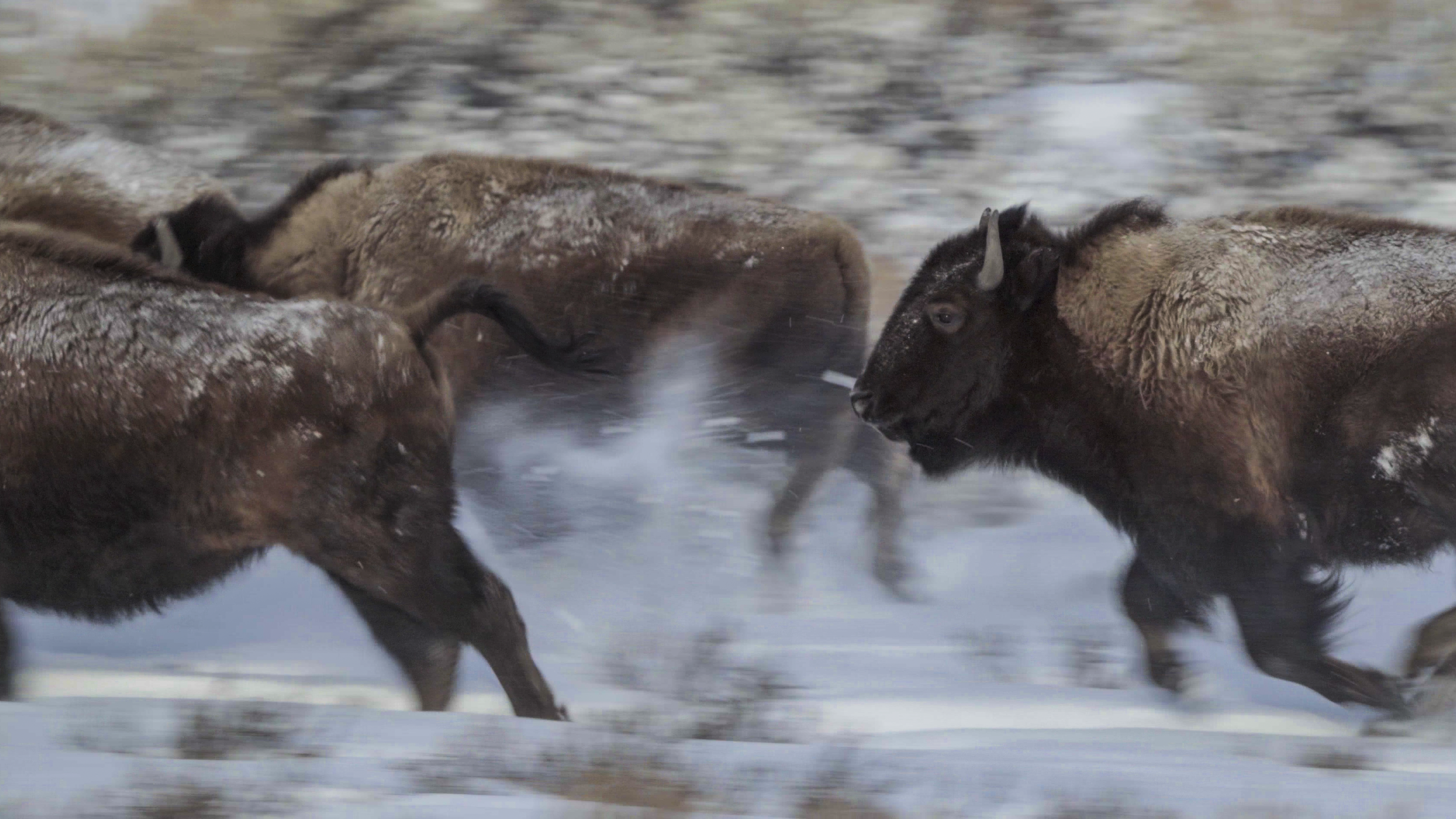
As winter sets in, migrating bison journey up to 70 miles, making back-and-forth movements along the way, to reach areas with less snow, whether at Yellowstone’s hydrothermal features or lower elevations.
In spring, bison return to their summer ranges as the snow melts away. They climb up in elevation to track newly emergent plants that are rich in nutrition, a behavior researchers refer to as “green-wave surfing.”
“What we see here today is a free-ranging buffalo herd that uses a migratory network that spans a third of Yellowstone National Park,” Geremia says.
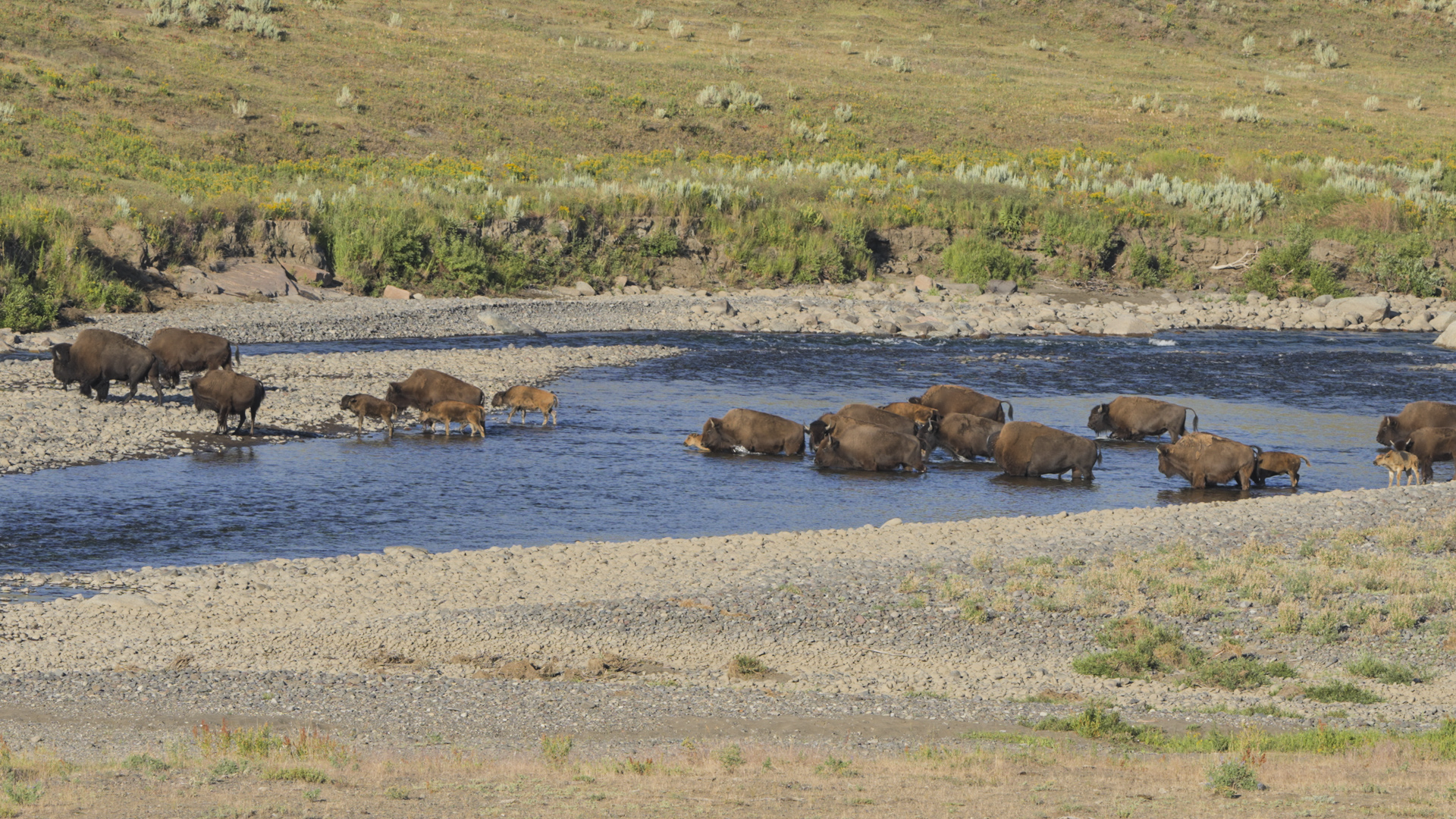
The film has a particular impact in demonstrating the ecological benefits of large mammal migration. New research, led by Geremia, shows how thousands of free-roaming bison have become ecosystem engineers, increasing and diversifying soil microbes and significantly boosting nutrient density in plants across the landscape.
“Learning how bison recovered migratory behavior and, in turn, how they have helped an ecosystem recover has shown me and others what is possible for landscapes that are open to bison returning,” Fugate says.
Given the value of bison to the land and to Indigenous peoples, efforts to restore bison to tribal lands and their historical range are already underway.
Jason Baldes (Eastern Shoshone) leads the Wind River Tribal Buffalo Initiative. His vision is to see bison restored to Eastern Shoshone and Northern Arapaho tribal lands, with the ability to migrate long distances in response to weather and environment.
“Bison are a long-lost relative,” Baldes says in the film, “a family member who was taken away.”
The history of the animals’ near-annihilation coincided with efforts led by the U.S. government to starve Native populations in the 1800s.
Baldes sees the return of bison to tribal lands as a practical means to bring healing to past wrongs against bison and the Native peoples who depended on them for millennia.
“We have the ability today to make some changes and address or reconcile some of that past — not in a revenge way, (but) in a healing way,” Baldes says. “Nothing is more healing than bringing back this animal that is so important on the land; that is so important for other plant and animal species; and is so important for our history.”
The Eastern Shoshone and Northern Arapaho tribes both steward herds on the Wind River Indian Reservation, with around 300 bison total.
The film producers’ impetus for making this documentary was, in part, to help people understand the importance of conserving big game migrations globally.
Restoring bison migration was a monumental feat led mainly by the National Park Service and spurred on by President Theodore Roosevelt. Currently, wild bison occupy only a small fraction of their historic range.
“We need to focus on protecting what we currently have across the globe, because it’s going to be a lot harder to restore those migrations if they’re lost,” Geremia says in the film.
The team hopes that viewers will learn a newfound appreciation for bison and their relationship with habitats in the American West.
“As a result of my research and making this film, I’ve developed a real respect for bison as an animal — an animal that has played such a unique role in our country’s history and ecology,” Fugate says.
“There’s nothing quite like experiencing the power of a large mammal migration in person,” Rodgers says. “It’s one of the greatest natural phenomena in the world. The fact that it still exists, and we can witness migrations of bison in our nation’s first national park, is really special.”
A short version of “What Bison See” will play at the “Bison Standing Strong” exhibit at the Smithsonian Museum of Natural History in Washington, D.C., beginning in October and continuing through fall 2029. The directors plan to submit the film to various film festivals in the U.S. and Canada and for broadcast.
The film is tentatively scheduled for online release in late 2027 or early 2028. Future showing locations include Jackson, Lander, Laramie, the Wind River Indian Reservation and Bozeman, Mont., with event times and venues to be announced.
About the Film
The Wyoming Migration Initiative production team included directors Rodgers and Fugate. Executive producers Kauffman and writer/filmmaker Gregory Nickerson raised funding and provided guidance.
“What Bison See” was funded by Yellowstone Forever. Additional support came from an anonymous donor and the Wyoming Governor’s Big Game License Coalition, with key support for the Wyoming Migration Initiative from the Knobloch Family Foundation and the George B. Storer Foundation.
Featuring:
- Chris Geremia, senior bison biologist, Yellowstone National Park
- Doug Blanton, bison biologist, Yellowstone National Park
- Ramon Perez, bison biologist, Yellowstone National Park
- Janey Fugate, researcher, Wyoming Migration Initiative
- Jason Baldes, executive director, Wind River Tribal Bison Initiative